From confusion, clarity.From clarity, results.
Time and again, I have seen the same thing: the people are not the problem.
Problems arise when direction is unclear, responsibilities overlap, and people are left compensating through sheer effort for what the system fails to provide.
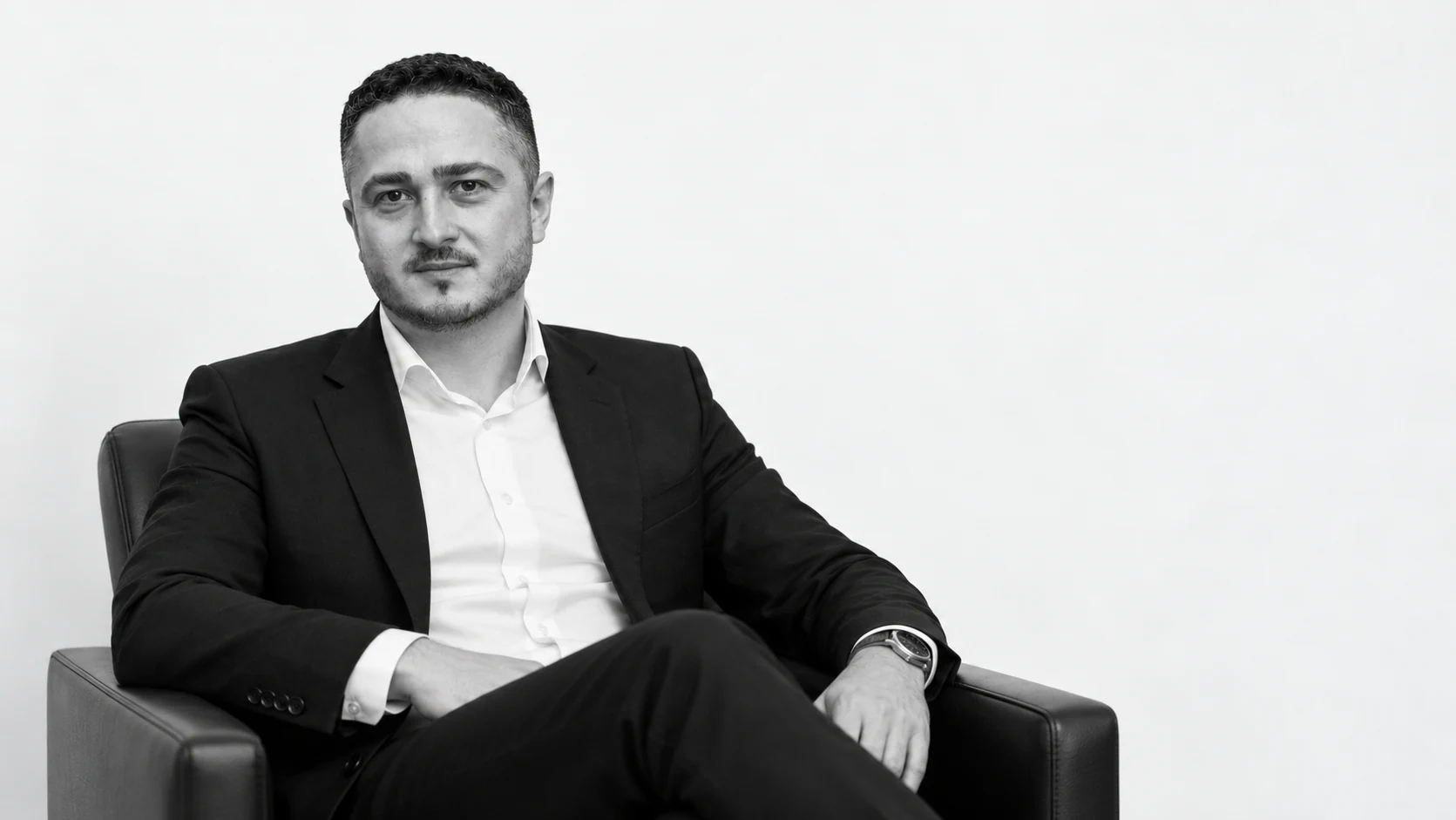
I have 16 years in sales and commercial management across banking and healthcare. I have inherited teams with no systems and built them from scratch. I have walked into industries I knew nothing about and built portfolios from zero. Every single time, the pattern was the same: when people have clarity and a clear way of working, results follow.
What you will find here is that experience, put in order — not a formula, but a way of thinking.
results are the destination,clarity the the journey
- CLARITY
- ALIGNMENT
- EXECUTION
- RESULTS

The story behind the methodology.
From banking to healthcare. From chaos to system. From the field to methodology.
I started in sales without knowing that selling means going after the client yourself. My first job was to issue credit to individuals. Nobody explained that I had to sell — I was just told to give out loans. So I sat and waited for people to walk in. My manager asked why no one was coming. I had no idea. Nobody had told me anything. I lost six months like that — waiting for clients who never came, with no direction, no system.
I moved to a call centre. This time I knew I had to build, not wait. In front of me: two subcontracted teams, nearly 50 agents, mostly students with zero sales experience. They froze, stumbled through conversations, gave up easily. Nobody had taught them how. I wrote the sales script from scratch — opening, pitch, qualifying questions, objections, close. I ran training in groups without halting operations. I tracked each person individually until they found their rhythm. Things changed. Over 600 credit cards sold per month. Not through pressure — through system.
I transferred to banking — a branch with poor results, at risk of closure. A portfolio of over 1,500 individual clients and 20 companies: loans, mortgages, refinancing, cards, deposits. I worked portfolio by portfolio, client by client. The branch recovered. The lesson that defined everything that followed: discipline, and the correct execution of a process, day after day, without shortcuts.
The moment I understood I had to go after the client myself —everything changed.
And yet I left. For a lower salary. Into a private hospital, in a field I knew nothing about — IVF, obstetrics and gynaecology, surgical procedures. Again, nobody explained anything. I was just told: you need to sell. But this time I knew you don't wait — you build. I went straight to the doctors inside the hospital. I spent time with them, understood what they do, who they refer to, who they work with. They gave me my first leads — doctors at public hospitals and private clinics to whom they referred patients. They returned to their work. I went out into the field, across Bucharest, and built the relationships from there. Time, real conversations, repeated visits. Some of those relationships have lasted to this day.
From that point on, I knew I could walk into any industry and build.The method was always the same: go to the source, understand people, build real relationships,and create the system that produces results.
I continued in healthcare. From zero — no territory, no portfolio, no relationships. I built partnerships with private clinics and public hospitals, recruited doctors, and grew portfolios from a few hundred euros a month to tens of thousands. The lesson of this period: every type of client has their own decision logic, and sustainable commercial performance comes from understanding that logic — not from pressure or visit frequency.
Then I took over a team. Five people, an empty laptop, no documents, no system, no direction — exactly where I had been at my first job. I knew precisely what was missing because I had lived through that absence myself. I built everything from scratch: a weekly planning system, standardised reporting, monthly forecasting, individual files per representative, a clear separation between doctor portfolios and contract portfolios. I restructured the team, defined territories, made the case for new hires. I created a customer support function to free the sales team from administrative work. I changed how we searched for public tenders — from a single CPV code to eight — and won contracts with major hospitals. The system was later adopted nationally by all regional coordinators. I opened the first sample collection point at a partner clinic and was involved in developing over 30 locations. I recruited people from completely different fields — automotive, courier, telecoms, education. I integrated them, trained them, and made them perform. In four years, output grew nearly fivefold.
This is the experience I bring. Not from books. From the field. From all of it, I learned to recognise patterns — in people, in teams, in organisations. Patterns that repeat, regardless of industry. The rest of this page is about those patterns.
"Performance doesn't happen by accident.
It is designed."

Why results don't reflect effort — even when people are working hard.
Commercial performance cannot be built through pressure, unrealistic targets, or constant changes in direction.
That is why, before changing people, processes, or objectives, I try to understand the organisation as a whole.
I look at strategy, commercial structure, responsibilities, cross-departmental collaboration, portfolios, performance indicators, and how decisions are actually made.
Four patterns I have encountered, repeatedly, across organisations.
Pressure replaces diagnosis
When results decline, the first impulse is more pressure: bigger targets, more meetings, tighter control. Rarely does anyone stop to understand why the problems appeared. Without a diagnosis, pressure treats symptoms, not causes.
People are replaced. The system stays.
When results don't materialise, the instinct is to replace people. But if the working system remains unchanged, new people will eventually arrive at the same results. Changing people without changing the system is just repeating the same problem.
Lack of visibility leads to poor decisions
When people lack a clear picture of reality, everyone starts deciding based on their own assumptions. Priorities shift from day to day, the forecast becomes a formality, and decisions are made on instinct rather than data. Without visibility, coordination becomes reactive — not management.
Accountability is diffuse
When accountability is unclear, people start assuming, duplicating work, or waiting for someone else to act. Roles overlap, priorities conflict, and the organisation burns energy on internal coordination instead of creating value for clients. Clarity of responsibility doesn't just reduce confusion — it raises ownership and accelerates execution.
Seven stages. One system. Never accidental.

Seven stages. One system.
Clarity Architecture is a methodology for turning complexity into clarity, structure, and performance. It starts from the real situation — individual, team, or organisation — and builds the structure people need in order to execute clearly, consistently, and measurably.
While building this site, I realised that over the years I had been approaching problems in almost the same order, regardless of company or industry. I didn't start from a method. I started from experience. Only later did I recognise that this way of thinking had a structure. Clarity Architecture is the name I gave it.
Every change begins with understanding the business as a system. Strategy, structure, processes, people, and decision-making must be viewed together, not in isolation. Only then can you understand root causes before building solutions.
Predictable, Sustainable Performance
The goal is not change itself. The goal is a system capable of producing predictable, sustainable results — regardless of industry or team size.

Where experience comes from.
The first lesson in how people function without a system. Agents with no experience, no clear direction — they froze, improvised, quit. I built a sales script from scratch and organised training without halting operations. Things changed. The results came from structure, not from extra effort. That was the first time I understood that people are not the problem. Average: 600 credit cards sold per month — Visa Classic, Visa Gold, American Express, and American Express Gold.
A branch with poor results, at risk of closure. I worked portfolio by portfolio, client by client. The branch recovered. The lesson that defined everything after it: discipline, and the correct execution of a process, day after day, without shortcuts.
I walked into a field I knew nothing about and built doctor portfolios from scratch — practice by practice, hospital by hospital. I applied the same approach I had developed in banking: understand first, build after. It worked. The first confirmation that principles transfer across industries.
Six years building complex commercial relationships — with doctors, hospital managers, directors of private clinics. The lesson of this period: every type of client has their own decision logic, and sustainable commercial performance comes from understanding that logic, not from pressure or visit frequency.
I inherited a team with no system and built a regional model from scratch — structure, processes, people. I came to understand that a team underperforms not because of poor people, but because of missing clarity, system, and discipline. This is where the way of thinking I named Clarity Architecture was formed. Output grew nearly fivefold in four years. Public tender win rate: 53%.

Situations. Diagnosis. Solution.
Each situation came with its own context. The diagnosis was different. The principle was always the same.
Two subcontracted teams, nearly 50 agents, mostly students with no sales experience. They froze, didn't know how to speak to clients, gave up easily. No guidance from inside.
The problem was not lack of motivation. It was lack of a system — they didn't know what to say, in what order, or how to handle objections. Without a script or structure, everyone improvised differently.
I built the sales script from scratch — opening, pitch, qualifying questions, objections, close. I organised training in groups without stopping operations. I tracked each person individually until they found their rhythm.
A branch with commercial performance below expectations, at real risk of closure. A portfolio of over 1,500 individual clients and 20 companies — inadequately covered.
No systematic approach to the portfolio. Existing clients were underserved, cross-sell and up-sell opportunities were untouched. Execution was inconsistent.
Portfolio by portfolio, client by client. Field activity, phone calls, company visits. Discipline and correct execution of each step, day after day.
A transition into a completely unfamiliar field — specialised medical services. No prior background in medicine, no network, no guidance. I was simply told: you need to sell.
You cannot sell medical services without first understanding how doctors think and work. A direct sales approach doesn't work here. You have to go to the source.
I went directly to the doctors inside the institution, understood their professional relationships, and received my first leads from them. I went into the field and built real relationships, visit by visit.
New territories in cities hundreds of kilometres away. No relationship with local doctors, no prior presence of the services I represented.
Doctors refer patients where they have trust. Trust is built through repeated presence, knowledge of the services offered, and demonstrated results.
Repeated visits, detailed presentation of infrastructure and medical capabilities, and recruitment of local doctors for collaboration. Building relationships doctor by doctor.
A private clinic generating approximately €3,000 per month. The commercial relationship existed, but was underdeveloped, with significant untapped potential.
The relationship was treated mainly transactionally. I identified the opportunity to develop it beyond the existing referral volume and to better integrate the clinic into the company's commercial ecosystem.
I invested in developing the long-term relationship and expanding the collaboration. The clinic began serving the company's subscribed patients as well, which broadened the patient base and grew the volume of activity.
The first account I was assigned when taking over the territory — a hospital with no prior activity with the services I represented. Starting point: zero.
There was no relationship, no referral flow, no clear procedure. Everything had to be built — the relationship, the process, the volume.
Constant presence, understanding the hospital's specific needs, building clear collaboration procedures, actively tracking every referral.
A five-person team inherited with no working system — no planning, no standardised reporting, no forecast, no organised files. An empty laptop. No documents.
The problem was not the people — it was the complete absence of a working framework. Without a system, even good people produce inconsistent and unpredictable results.
Built from scratch: weekly planning, standardised reporting, monthly forecasting, individual files per representative, separation of doctor vs. contract indicators, portfolio reorganisation, territory definition.
A significant volume of records was blocked in the processing pipeline, some for nearly a month. Data discrepancies were preventing processing. The partner was raising complaints, and the collaboration was at risk of termination.
The problem was not in the processing itself, but at the registration stage. Data mismatches were creating a blockage that prevented files from entering the workflow. I identified that the solution required involving the GDPR function.
I analysed the root cause and worked with the GDPR-responsible colleague to find a solution. The blockage was cleared, the workflow resumed, the collaboration stabilised. The procedure was then permanently implemented.
The entire division was identifying public tenders through the same single CPV code — a uniform, unrevised method applied by all regional coordinators. Relevant opportunities were systematically missed, not from lack of effort, but because the search tool was inadequate.
The problem wasn't the absence of market opportunities. It was the search architecture: a single CPV code did not cover all the service categories for which the organisation was eligible to bid. Every relevant tender that went undetected was a commercial opportunity that never reached the evaluation stage.
Starting from this observation, I mapped the full structure of CPV codes relevant to the division's activity. I identified 7 applicable codes — a far more complete search framework than what had been in use. I proposed adopting this method across the entire national division. It was adopted by all regional coordinators — no system changes, just a methodology change.
A team inherited without cohesion — each person working independently, no mutual support, no sense of shared purpose. Performance was individual, not collective.
The absence of a shared working framework and collective objectives had created an "everyone for themselves" culture. There was simply no reason to collaborate.
I built a shared system, defined clear responsibilities, established a weekly working cadence, and recruited new people from completely different fields — automotive, courier, telecoms, education — integrating them into the culture.
"I don't offer recipes.
I share a way of working built from experience."
Clarity · Alignment · Execution · Results

Two types of situation. One principle.
There is no standard programme. There is a methodology applied to your situation.
Build your way of working on clarity, not improvisation.
If you feel you are working hard but without a clear direction — if you have changed industry, taken over a team without guidance, or simply want to structure your way of working — I can help you build your own system. Commercial representative, medical representative, coordinator, manager, or professional in any field: the principles are the same. I made this transition myself, from banking to healthcare, knowing nothing about medicine. I know what the absence of direction looks like, and I know how to build order from it.
We start from your experience →Build a system that produces predictable performance.
If your team works hard but results are inconsistent, the problem is not always the people. I analyse how the organisation functions, identify the blockages — lack of clarity, diffuse responsibilities, processes that don't support execution — and we build together the structure that is missing.
We talk about your organisation →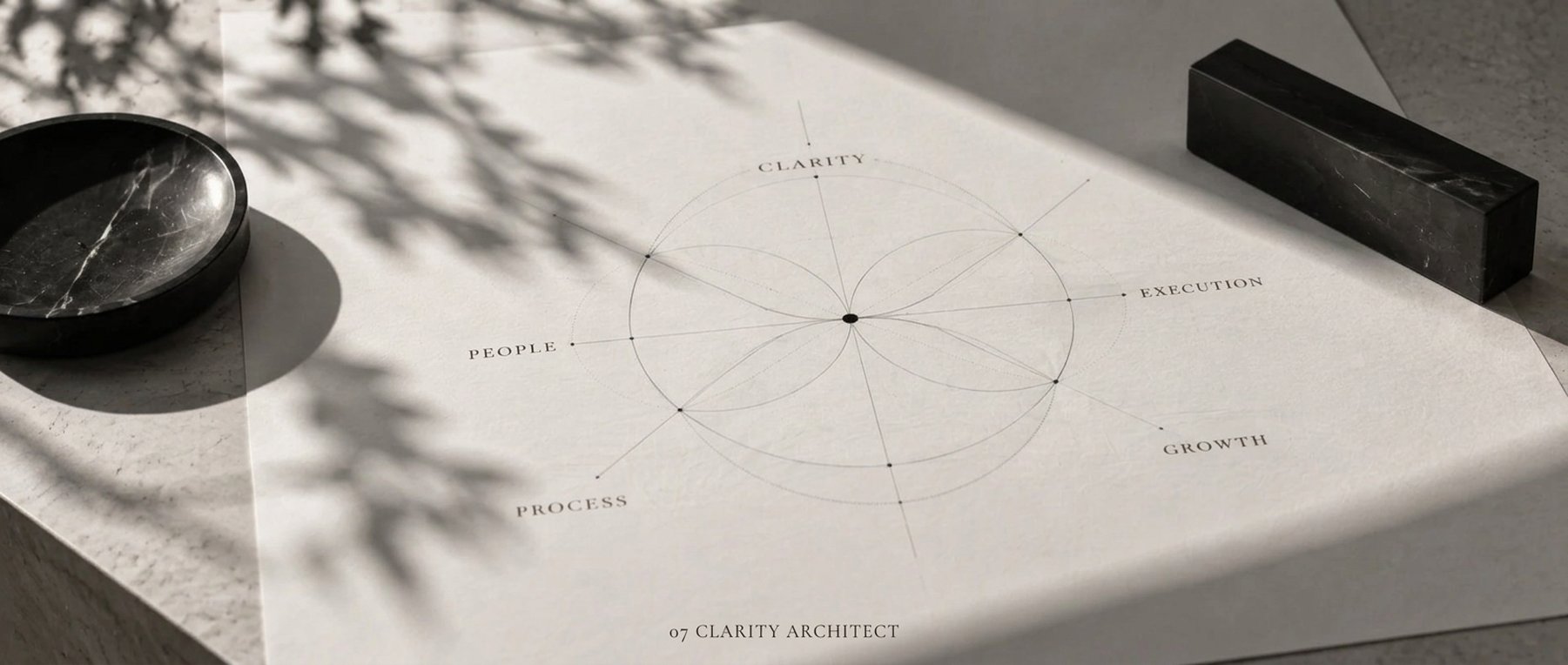
How I Work.
I don't offer recipes. I share a way of working built from experience.
You feel you are working hard, but without a clear direction. Or you have taken on a new responsibility and don't know where to begin. We start from your situation — not from a standard programme. Commercial representative, medical representative, coordinator, or manager: the title doesn't matter. What matters is what isn't working and what needs to be built.
The team is working, but results are inconsistent. Or the organisation depends too much on you. Before any intervention, I understand the situation as a whole — people, processes, direction. Only after the diagnosis do we establish together what is missing and how to build it.
Not sure I can help you? Let's talk first. You tell me your situation — I will tell you honestly whether and how I can contribute. No commitment, no templates, no empty promises. If it makes sense to continue, we decide together what the collaboration looks like.
Let's Start with a Conversation.
Every collaboration begins with a conversation about your real situation. Not every conversation leads to a collaboration. What matters is understanding whether and how I can bring real value.
The first conversation is not about solutions. It is about understanding your situation — and seeing together whether I can genuinely be of help.